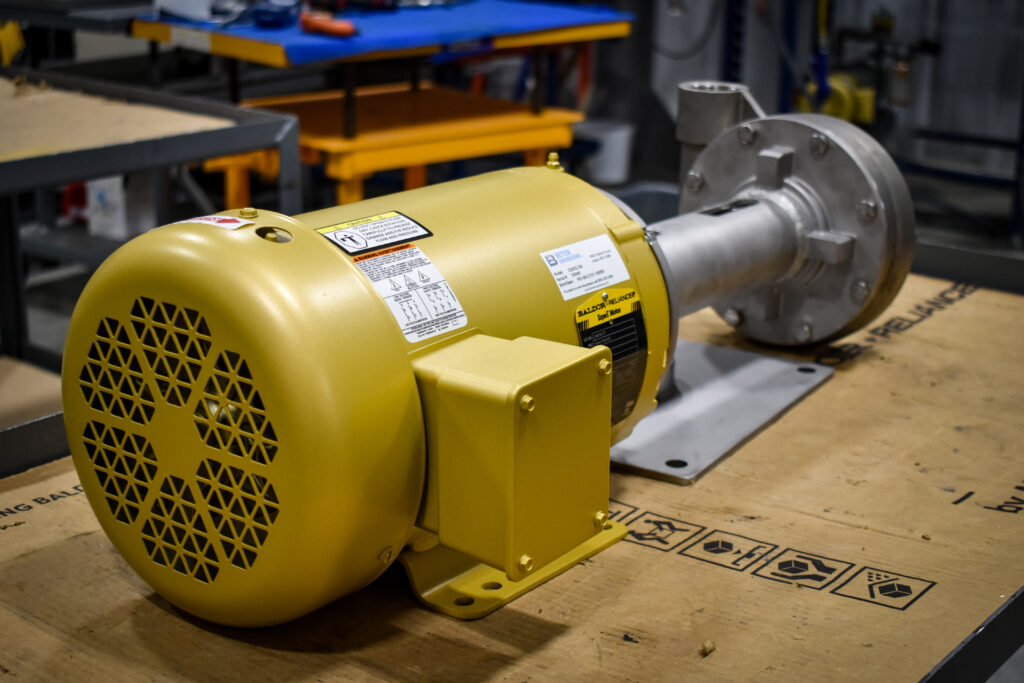
Vertical Pumps for Parts Washers: Improving Performance, Reliability, and Uptime
Industrial parts washers are workhorses of manufacturing, automotive, aerospace, and metal fabrication operations. Whether you’re removing machining oils, coolants, metal chips, or industrial soils from precision components, the pump at the heart of your wash system is the critical link between adequate cleaning and costly rework or equipment failure.
Vertical centrifugal pumps — also known as vertical sump pumps or vertical immersion pumps — have emerged as the pump of choice for demanding parts washing applications. Here’s why.
Why Parts Washer Pump Selection Matters
The pump in a parts washing system isn’t just moving water — it’s typically circulating a hot, chemically aggressive cleaning solution laden with detergents, degreasers, and potentially suspended metal particles, oil, and cutting fluid contamination. Standard pumps designed for clean water will fail prematurely in this environment.
Undersized or poorly specified pumps lead to:
- Inadequate spray pressure and poor cleaning performance
- Frequent seal failures from chemical incompatibility
- Overheating and motor failure from continuous-duty demands
- Clogged impellers from swarf, chips, and debris
- Unplanned downtime and costly production interruptions
The Vertical Pump Advantage in Parts Washing
1. Sump-Mount Design Eliminates Priming Issues
Vertical centrifugal pumps are designed to mount directly in the wash tank sump, with the pump end submerged in the cleaning solution. This eliminates the priming challenges that plague horizontally mounted pumps and ensures consistent, reliable operation — especially critical in automated wash systems running continuous production cycles.
2. Compact Footprint for Tight Machine Integration
Parts washers, particularly cabinet washers and rotary table washers, have limited internal space. The vertical configuration allows the motor to mount above the tank while the pump casing and impeller reside in the sump, maximizing cleaning chamber space without sacrificing pump capacity.
3. Superior Handling of Contaminated Solutions
Industrial parts washing solutions are rarely clean. Metal chips, swarf, broken abrasive particles, and accumulated soils are common. Vertical sump pumps designed for industrial service feature open or semi-open impeller designs capable of passing small solids without clogging — a critical advantage over close-tolerance pump designs.
4. Chemical Resistance for Aggressive Cleaning Chemistries
Modern parts washing operations use a wide range of chemistries — alkaline detergents, acidic rust inhibitors, solvent-based degreasers, and specialty coatings. Vertical pumps constructed with corrosion-resistant materials such as 316 stainless steel provide the chemical compatibility needed for long service life.
5. Continuous-Duty Motor Design
Parts washers in production environments often run continuously — one, two, or three shifts per day. Vertical pumps with TEFC (totally enclosed fan-cooled) motors rated for continuous duty deliver the reliability that demanding production schedules require.
Selecting the Right Vertical Pump for Your Parts Washer
Proper pump selection for a parts washer application involves several key parameters:
Flow Rate Requirements
Spray pressure and nozzle coverage in a parts washer are directly related to pump flow rate. Most parts washer manufacturers specify a minimum flow rate — typically expressed in gallons per minute (GPM) — to achieve proper cleaning performance. Undersizing the pump is one of the most common causes of poor wash results.
Total Dynamic Head (TDH)
The pump must overcome the static lift from the sump to the spray manifold, plus friction losses through the piping and spray nozzles. Properly calculating TDH ensures the pump delivers adequate pressure at all spray nozzles throughout the system.
Fluid Temperature
Hot water washing — typically 140°F to 180°F — improves cleaning performance significantly. Pump materials, motor bearings, and seal components must be rated for elevated temperature service. This is an area where vertical sump pumps with appropriate material specifications outperform general-purpose pumps.
Chemical Compatibility
Match pump wetted materials to your specific cleaning chemistry. Alkaline cleaners are compatible with most metals; acidic descalers may require stainless construction. Consult your chemical supplier’s compatibility data before specifying pump materials.
Price Pump Vertical Pumps for Parts Washer Applications
Price Pump’s vertical centrifugal sump pumps are engineered for the demanding conditions of industrial parts washing. Our vertical pump line features:
- Stainless steel and corrosion-resistant construction for aggressive cleaning chemistries
- Continuous-duty motors rated for high-temperature wash solution service
- Compact designs for easy integration into existing or new wash systems
- Quick-disconnect mounting configurations for simplified maintenance access
Replacing a worn or undersized parts washer pump? Price Pump’s application engineers can help you specify the exact vertical pump configuration to match your wash system — contact us for fast technical support and same-day quotations.
Conclusion
The pump is the heartbeat of your parts washing system. Selecting a vertical centrifugal sump pump designed specifically for industrial wash applications — with the right flow capacity, chemical resistance, and continuous-duty rating — is a direct investment in cleaning performance, production reliability, and reduced maintenance costs.
Don’t let a pump failure bring your production line to a halt. Price Pump’s vertical pump solutions are built to deliver consistent, high-performance results in your most demanding parts washing and industrial cleaning applications.